MindMup mind mapping tool
I’ve started experimenting with this mind mapping tool which is now available through Google as an app. This is a very simple tool which can be easily used and manipulated to gather your ideas with students. Once you get the language of the tools you can follow keyboard shortcuts to add new nodes to your maps.
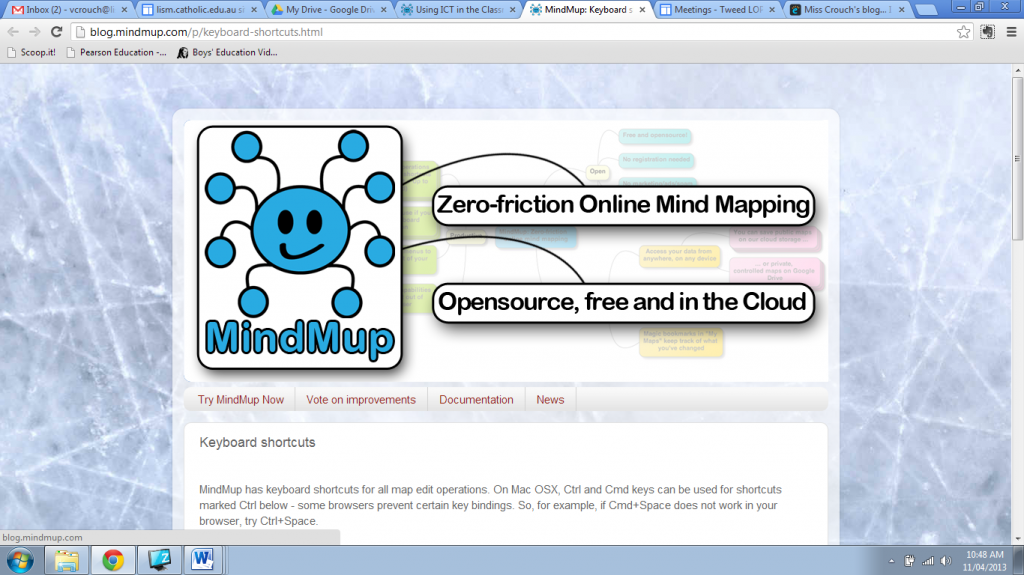
You can also use MindMup from the URL http://www.minmup.com I’ve connected mine to my google account so that I can then save directly to my Google Drive, otherwise it’s saved to the cloud and you need to keep track of your URL location.
Once you have finished creating your mind map you can then export to various formats (including as an image or table).
What I like most about this tool is the simplicity. I will be teaching my students how to use this tool and incorporating it into some pre assessment and post assessment work.